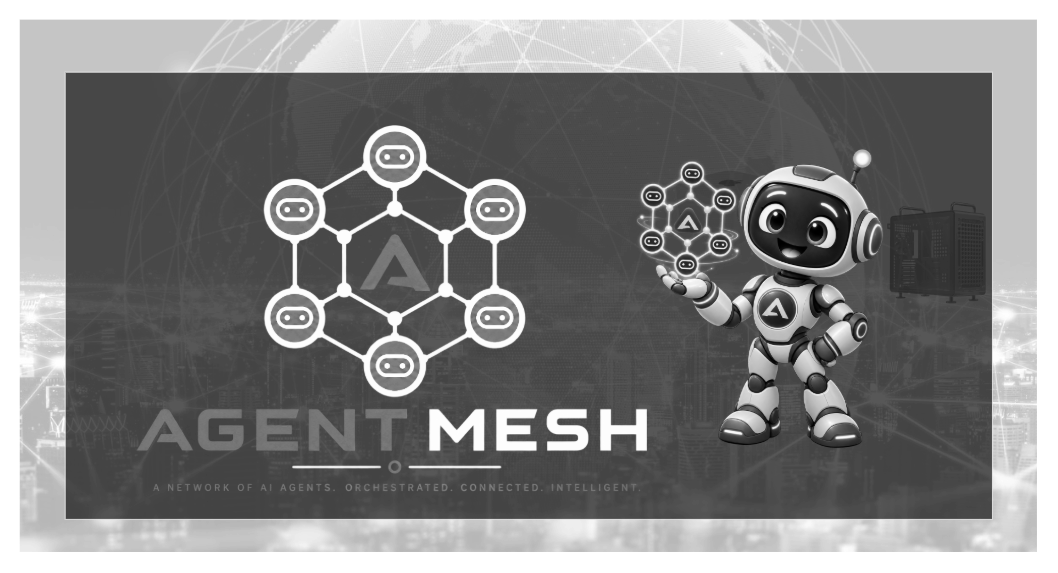
The agent mesh logo and agent character

Introducing: Agent Mesh

It didn’t take very long to realize that the project I needed to explore agentic coding would be inspired by the stories previously written about Distributed LLM and the Neural Mesh. That project is Agent Mesh. It is a lightweight LLM workflow framework for orchestrating LLMs to perform specific tasks… like write a story! An LLM Story. 20,000 lines of go code with over 2:1 test coverage… in 7 days. And it isn’t bad. Let that sink in. ...

Sean HignettSean Hignett  · September 2, 2026
The interconnected world wide inter-webs with Llama.cpp overlayed.

The Great Unbundling Redux

It is very curious that my local Qwen model came up with the same title for the story as ChatGPT. It did an excellent job, and it took only a few seconds longer then the frontier models. Total time was 2m 17s @ 25 t/s. Perhaps this version serves to amplify the narrative simply by how it was created. The prompt: I’d like to construct a speculative and fictional narrative grounded in factual history. The core of the thesis is that the AI stock market bubble will arrive simply because the technology to run LLM effectively on a small scale will proliferate, making the enormous data centres excessive for the actual demand. This has precedence in the recent history of computers themselves, where upon introduction, computers were large mainframes for several decades, but as their utility grew, the technology improved and their size and power requirements became such that we can all carry around computers more powerful then the original mainframes in our pockets as iPhones. Leverage this metaphorical alignment, and any others you can derive from history that will show the future to be a decentralization of LLM technology, and a focus on distributed, specialized nodes. Much in the way the internet enabled computers to join at scale and accomplish incredibly complex tasks, and internet-of-llm communication technology will unlock the same decentralized and distributed model. Please construct a narrative of the future that reflects this perspective. ...

Sean HignettSean Hignett  · August 24, 2026
The interconnected world wide inter-webs with a ChatGPT logo overlay.

The Great Unbundling

The prompt: I’d like to construct a speculative and fictional narrative grounded in factual history. The core of the thesis is that the AI stock market bubble will arrive simply because the technology to run LLM effectively on a small scale will proliferate, making the enormous data centres excessive for the actual demand. This has precedence in the recent history of computers themselves, where upon introduction, computers were large mainframes for several decades, but as their utility grew, the technology improved and their size and power requirements became such that we can all carry around computers more powerful then the original mainframes in our pockets as iPhones. Leverage this metaphorical alignment, and any others you can derive from history that will show the future to be a decentralization of LLM technology, and a focus on distributed, specialized nodes. Much in the way the internet enabled computers to join at scale and accomplish incredibly complex tasks, and internet-of-llm communication technology will unlock the same decentralized and distributed model. Please construct a narrative of the future that reflects this perspective. ...

Sean HignettSean Hignett  · August 24, 2026
The interconnected world wide inter-webs with the DeepSeek logo overlay.

The Decompilation

The prompt: I’d like to construct a speculative and fictional narrative grounded in factual history. The core of the thesis is that the AI stock market bubble will arrive simply because the technology to run LLM effectively on a small scale will proliferate, making the enormous data centres excessive for the actual demand. This has precedence in the recent history of computers themselves, where upon introduction, computers were large mainframes for several decades, but as their utility grew, the technology improved and their size and power requirements became such that we can all carry around computers more powerful then the original mainframes in our pockets as iPhones. Leverage this metaphorical alignment, and any others you can derive from history that will show the future to be a decentralization of LLM technology, and a focus on distributed, specialized nodes. Much in the way the internet enabled computers to join at scale and accomplish incredibly complex tasks, and internet-of-llm communication technology will unlock the same decentralized and distributed model. Please construct a narrative of the future that reflects this perspective. ...

Sean HignettSean Hignett  · August 24, 2026
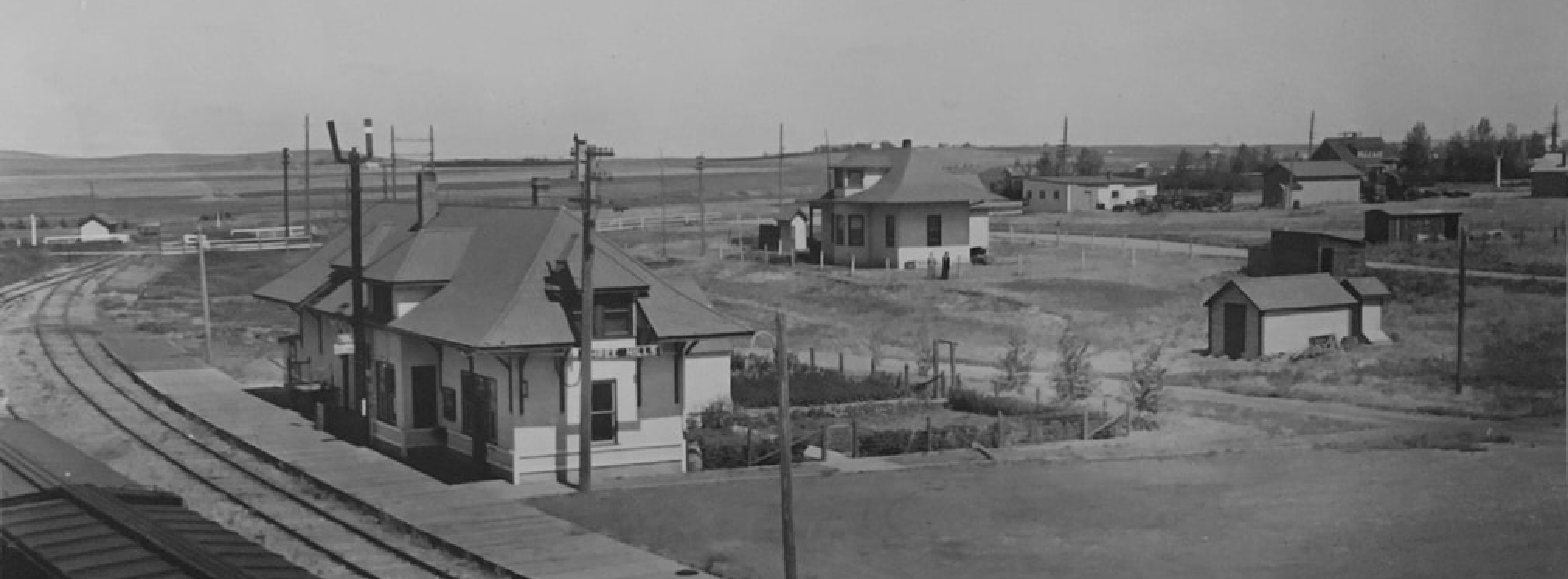
Early days in central Alberta viewing rail lines and station houses

Distributed LLM

Rather than have one big LLM that can do everything and requires 600GB of VRAM and data center grade power and cooling, why not create a distributed network of specialized LLMs that can work together, in parallel, at scale, to solve problems and accomplish tasks. The prompt: Create a diagram that depicts a network of LLMs all intercommunicating with the most efficient form of networked token exchange, co-ordinated by a master LLM. Each LLM should run on it’s own dedicated hardware, and each tailored to a particular function, such as vision-to-text, or text-to-speech, and the various specialized training areas of function LLMs currently demonstrate. The master LLM should have the power and capability to reason and understand the work required, but it does not necessarily need to do the work. It can leverage a network of experts and computational resources in this web of specialized LLMs. The protocol between the LLMs should be fast and efficient, but represent summarized token exchanges, not NVLink level bit movement. The diagram should reflect the similarity of such a network to the human organism and how many sensory components interoperate to perform function. It should also attempt to illustrate the efficiency and scalability of such a network in contrast to the one-big-LLM model. ...

Sean HignettSean Hignett  · August 22, 2026
A panoramic vista somewhere in central Alberta

The LLM Server

I’ll admit I am somewhat late to the party. While the mainstream LLM offerings have been useful since they emerged, in recent months their utility has become integral to day to day life, and setting up a proper agentic tooling workflow seems a core requirement to doing hands on technical work efficiently. But I do hate those monthly plans. It was comments made by Linus Torvalds that first got me truly interested in the underlying technology. ...

Sean HignettSean Hignett  · August 21, 2026
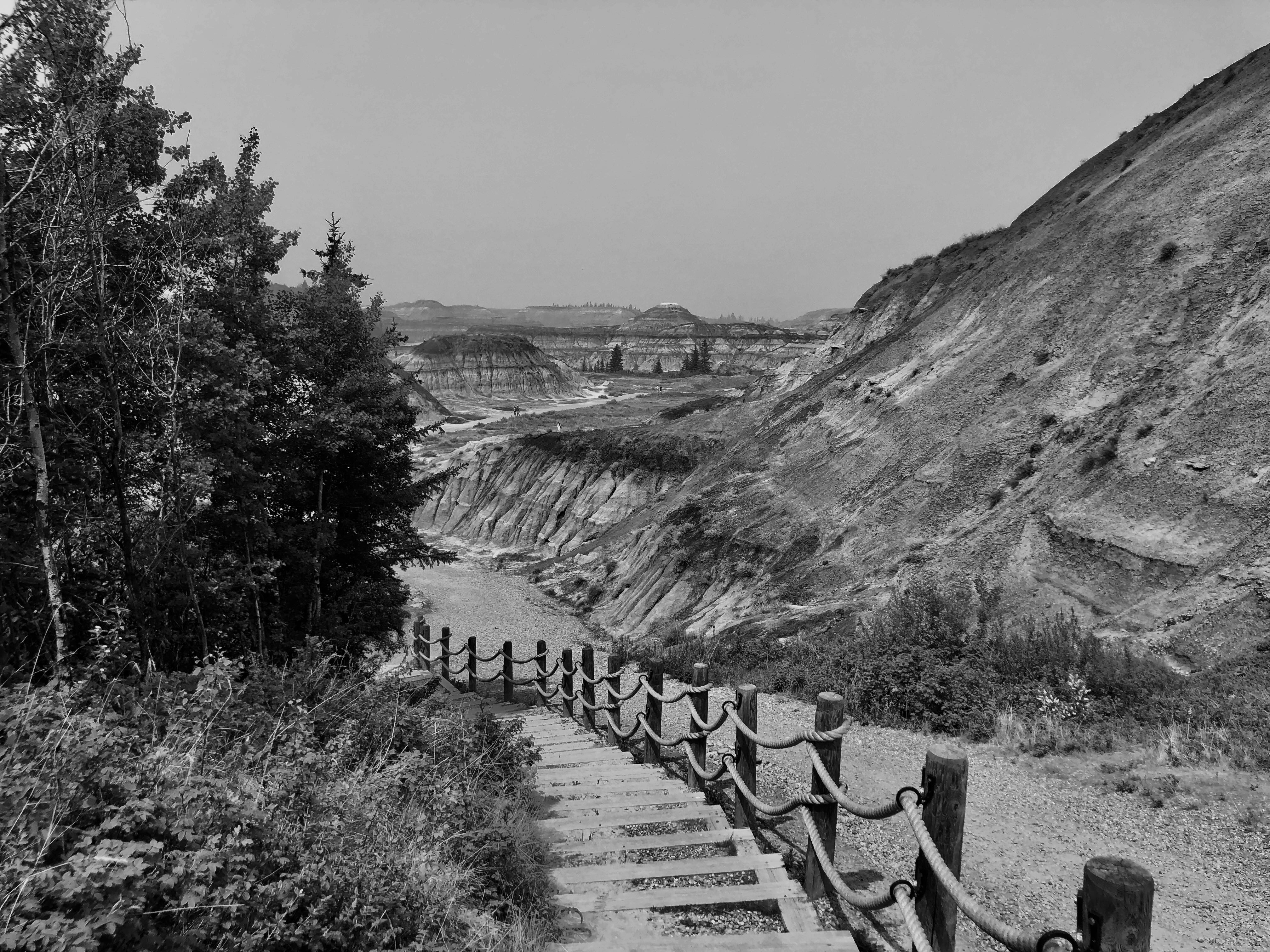
Heading into the canyon

Go Hugo

Shut out of Ghost because it couldn’t send email to 2P verify me? I don’t recall configuring email, but if I did… I now feel ashamed. What a pile of @#$#@! Their docs suggested I should sign up with one of several mail providers to handle my outgoing email for a reasonable fee. I thought… Why did I ever run Ghost? If they are trying to sell something I don’t think it is FOSS in the original sense. SnakeOil-OSS would be more apt. ...

Sean HignettSean Hignett  · August 20, 2026
Railway tracks leading off into the horizon somewhere in central Alberta

Kubernetes in a State of Flux

Cluster Builder was recently updated to support Flux CD GitOps, which drives the Kubernetes configuration serving this site. Cluster Builder tooling is used to deploy a base Kubernetes 1.33 cluster using KubeAdm to a cluster of KVM VMs running on Proxmox VE. Included are the foundational Canal CNI, the Flux Operator and a Sealed Secrets deployment based on an external key pair. Using the external, pre-created key pair for encrypting Sealed Secrets ensures that the same GitOps repo can support multiple clusters, and that the clusters themselves can be deployed and re-deployed as required. ...

Sean HignettSean Hignett  · September 25, 2025
A panoramic vista somewhere in central Alberta

The Homelab Gets an Upgrade

After nearly 10 years the Intel Core i7-7700s have been retired. Replaced with a single UM790 Ryzen 9 7940HS. Added 96GB of DDR5 SODIMM and 1.5 TB of NVMe storage. The unit runs off a tiny Cyber Power ST425VA UPS, with network supplied by a TP-Link Wifi Ethernet Bridge (RE315) connecting to the Starlink Wifi Network. I did all this when DDR5 RAM could still be purchased. Setup was without issue. The units claim max 64GB RAM, but forums revealed they would take the new 128GB SODIMMs, and my 96GB was recognized OOTB. ...

Sean HignettSean Hignett  · July 1, 2025
A panoramic vista somewhere in central Alberta

Rural Homelab Up and Running

The Outpost is live! See the about page for details.

Sean HignettSean Hignett  · June 30, 2025